
Locating Places on the Earth
Exploring Society: India and Beyond
| Class 6 | Theme A
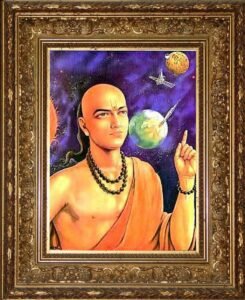
“The globe of the Earth stands in space, made up of water, earth, fire and air and is spherical. It is surrounded by all creatures, terrestrial as well as aquatic.” — Aryabhata (about 500 CE) |
THE BIG QUESTIONS 1. What is a map and how do we use it? What are its main components? 2. What are coordinates? How can latitude and longitude be used to mark any location on the Earth? 3. How are local time and standard time related to longitude? |
PART A: NOTES
- Key Terms to Remember
Term | Meaning |
Map | A drawing/representation of an area as seen from above |
Atlas | A book or collection of maps |
Scale | The ratio between distance on map and actual distance on ground |
Cardinal Directions | The four main directions: North, South, East, West |
Intermediate Directions | NE, NW, SE, SW — directions between cardinal points |
Symbols | Signs used on maps to represent features like roads, rivers, buildings |
Globe | A sphere on which a map of the Earth is drawn |
Coordinates | A pair of values (latitude + longitude) that pinpoint any location |
Latitude | Distance measured in degrees North or South of the Equator |
Equator | Imaginary line at 0° latitude, halfway between the two poles |
Parallel of Latitude | An imaginary line running east-west, parallel to the Equator |
Longitude | Distance measured in degrees East or West of the Prime Meridian |
Meridian of Longitude | Half-circle line running from North Pole to South Pole |
Prime Meridian | The 0° longitude line passing through Greenwich, London |
Grid / Grid Lines | Network of latitudes and longitudes on a globe/map |
Local Time | Time based on the longitude of a specific place |
Standard Time | A single official time adopted by a country |
IST | Indian Standard Time — 5 hours 30 minutes ahead of GMT |
GMT | Greenwich Mean Time — the time at the Prime Meridian (0°) |
Time Zone | A region of the Earth that uses the same standard time |
International Date Line | Line at ~180° longitude where the calendar date changes |
Estuary | The place where a river meets the sea |
Madhya Rekha | Ancient Indian prime meridian passing through Ujjain (Ujjayini) |
- What is a Map?
Definition: A map is a representation (drawing) of an area as seen from above. It can show a small area (village, town) or a large area (country, world). Atlas: A book or collection of maps. |
Types of Maps
Type of Map | Shows | Example |
Physical Map | Natural features — mountains, rivers, oceans | Map showing Himalayan ranges, rivers of India |
Political Map | Countries, states, cities, boundaries, capitals | Map of India showing all states and capitals |
Thematic Map | A specific type of information | A rainfall map or population density map |
Three Main Components of a Map
Component | What it means | Example |
Distance (Scale) | Ratio of map distance to real distance | 1 cm = 500 m (city map) or 2.5 cm = 500 km (India map) |
Direction | Which way to go — cardinal & intermediate points | N, S, E, W, NE, NW, SE, SW — shown with an arrow or compass |
Symbols | Small signs that represent real features | River = blue wavy line; Railway = ──┼┼┼──; Temple = small icon |
Memory Trick: DSS = Distance (Scale), Direction (N/S/E/W), Symbols (signs for features) Scale Calculation: Actual Distance = Map Distance × Scale Value Example: If scale = 1 cm : 500 m, and two points are 4 cm apart on map, real distance = 4 × 500 m = 2,000 m = 2 km |
- Mapping the Earth — The Globe
Why a globe? The Earth is nearly spherical, not flat. A flat map always distorts shapes. A globe represents Earth more accurately. Try this: Peel an orange and try to flatten the skin — it tears at the edges! That is why we cannot perfectly represent a sphere on a flat piece of paper. |
- Coordinates — Locating Places Precisely
What are coordinates? A coordinate system uses TWO values to pinpoint any location exactly — just like a market stall at “5th row, 7th shop” or a chess square “d4”. On Earth, these two coordinates are Latitude and Longitude. |
- Latitude
Latitude = Distance from the Equator (measured in degrees North or South) Lines of latitude run East–West, parallel to the Equator → called ‘parallels of latitude’ Equator = 0° | North Pole = 90°N | South Pole = 90°S The Equator is the LONGEST parallel. Parallels become smaller circles toward the poles. |
Latitude and Climate
Zone | Latitude Range | Climate | Also Called |
Equatorial Zone | Near 0° | Hot | Torrid |
Mid-Latitude Zone | 23.5° – 66.5° N/S | Moderate | Temperate |
Polar Zone | Near 90° N/S | Cold | Frigid |
- Longitude
Longitude = Distance from the Prime Meridian (measured in degrees East or West) Lines of longitude run North–South, from pole to pole → called ‘meridians of longitude’ Prime Meridian (Greenwich) = 0° | Range = 0° to 180° E or W All meridians are EQUAL in length (half-circles from pole to pole). |
Latitude vs Longitude — Quick Comparison
Feature | LATITUDE | LONGITUDE |
Direction of lines | Run East–West (horizontal) | Run North–South (pole to pole) |
Shape of lines | Full circles (parallels) | Half-circles (meridians) |
Reference (0°) | Equator = 0° | Prime Meridian (Greenwich) = 0° |
Range | 0° to 90° N or S | 0° to 180° E or W |
Largest line | Equator (longest circle) | All meridians are equal length |
Tells us about | North/South position & climate | East/West position & time |
India’s range | 8°N to 37°N | 68°E to 97°E |
The Four Hemispheres
NORTHERN HEMISPHERE (Above Equator) 0° to 90°N Includes most of India, Europe, Asia | EASTERN HEMISPHERE (Right of Prime Meridian) 0° to 180°E Includes India, Asia, Australia |
SOUTHERN HEMISPHERE (Below Equator) 0° to 90°S Includes Australia, most of South America | WESTERN HEMISPHERE (Left of Prime Meridian) 0° to 180°W Includes North America, South America |
India lies in: Northern Hemisphere (above Equator) AND Eastern Hemisphere (right of Prime Meridian). |
- India’s Ancient Prime Meridian — Madhya Rekha
Centuries before Europe, India had its own Prime Meridian! Name: Madhya Rekha (‘middle line’) — used in ancient Indian astronomy Location: Passed through Ujjayini (modern Ujjain, at ~75.8°E) Famous Astronomer: Varahamihira worked in Ujjain about 1,500 years ago. Indian astronomers knew about latitude, longitude, and the need for a prime meridian. The current Prime Meridian (Greenwich) was fixed internationally in 1884. |
- Time Zones — Longitude and Time
How are time and longitude connected? Earth completes 360° rotation in 24 hours So in 1 hour → 15° of longitude passes (360 ÷ 24 = 15) Moving EAST → time increases (add 1 hour per 15°) Moving WEST → time decreases (subtract 1 hour per 15°) Quick Formula: Time difference = (Difference in longitude) ÷ 15 hours |
Local Time vs Standard Time
Feature | Local Time | Standard Time |
Definition | Time based on a place’s specific longitude | A single official time for a whole country |
Based on | Exact longitude of that location | A chosen central meridian |
Problem | Many different times in one country! | Solved: everyone in the country uses the same time |
India example | Porbandar (Gujarat) has earlier sun-time than Tinsukia (Assam) | All of India uses IST = GMT + 5 hrs 30 min (based on 82.5°E) |
IST: Indian Standard Time = GMT + 5 hours 30 minutes (based on 82.5°E meridian) International Date Line: Located at ~180° longitude (opposite Prime Meridian). Crossing it eastward: subtract a day. Crossing westward: add a day. |
PART B: ANSWERS TO QUESTIONS
Section I: In-Chapter Activity Answers
Let’s Explore — Map of Small City (Fig. 1.1)
1. The hospital is located roughly in the centre of the city, between the school and the market. 2. Blue-coloured areas = Water bodies (lake/river). 3. The museum is farther from the railway station than the school and the Nagar Panchayat. |
Let’s Explore — Cardinal Directions (City Map)
Identify correct/incorrect statements: 1. ‘The market is north of the hospital.’ → INCORRECT. The market is south of the hospital. 2. ‘The museum is southeast of the bank.’ → CORRECT. The museum is to the south and slightly east of the bank. 3. ‘The railway station is northwest of the hospital.’ → CORRECT. The railway station is to the west and slightly north. 4. ‘The lake is northwest of the apartment blocks.’ → CORRECT. The lake/river area is to the northwest. |
Let’s Explore — Chess Move
If you play Black and respond with the same opening move (Queen’s pawn two squares forward), the pawn moves from: d7 to d5 |
Let’s Explore — Porbandar & Tinsukia Time Difference
Why is it already dark in Assam but still daylight in Gujarat? Answer: Tinsukia (Assam) is at a much higher longitude (~95°E) than Porbandar (~70°E). The Earth rotates eastward, so the Sun rises and sets earlier in the east. Assam gets daylight and darkness earlier than Gujarat. Time difference calculation: Difference in longitude = ~30° | 15° = 1 hour | So 30° = 2 hours. Tinsukia’s local time is about 2 hours ahead of Porbandar’s local time. Local vs Standard Time: Even though local times differ, both cities use IST (Indian Standard Time) officially. IST is based on 82.5°E and is the same all across India. |
Section II: End-of-Chapter Exercise Answers
Q1. Calculate real distance from Narmada estuary to Ganga estuary (scale: 2.5 cm = 500 km)
Method: Measure the map distance between the two estuaries on Fig. 5.2. Approximate map distance ≈ 5 cm. Calculation: 2.5 cm = 500 km → 1 cm = 200 km → 5 cm = 1,000 km Approximate real distance = 1,000 km (this may vary slightly based on your exact measurement). |
Q2. Why is it 5:30 pm in India when it is 12 pm (noon) in London?
India’s standard meridian is 82.5°E. London is at 0° (Prime Meridian = Greenwich). Calculation: 82.5° ÷ 15 = 5.5 hours → 5 hours 30 minutes ahead. So when London has noon (12:00 PM), India has 12:00 + 5:30 = 5:30 PM (IST). |
Q3. Why do we need symbols and colours in a map?
Symbols and colours are needed because: 1. A map is a small drawing of a large area — there is not enough space to draw actual pictures of every building, river, or road. 2. Symbols allow many details to be shown in limited space (e.g., a small icon for a post office, a wavy blue line for a river). 3. Colours help distinguish features quickly — blue for water, green for forests, brown for mountains, yellow for plains. |
Q4. Find out what is in the eight directions from your home/school. (Sample)
(Students should fill in based on their actual location. Here is a format to follow:) North: _____ | South: _____ | East: _____ | West: _____ NE: _____ | NW: _____ | SE: _____ | SW: _____ |
Q5. Difference between local time and standard time.
Local Time: The time calculated based on the exact longitude of a particular place. Since the Earth rotates 15° per hour, every place technically has its own local time. For example, Tinsukia (Assam, ~95°E) has a different local time from Porbandar (Gujarat, ~70°E). Standard Time: One official time adopted by an entire country to avoid confusion. India uses IST (Indian Standard Time), which is GMT + 5 hours 30 minutes, based on the 82.5°E meridian. This is the same for all of India, even though local times differ. |
Q6. Delhi (29°N, 77°E) and Bengaluru (13°N, 77°E) — Difference in local time?
Both cities have the SAME longitude (77°E). Since local time depends only on longitude (east-west position), there is NO difference in local time between Delhi and Bengaluru. Note: Latitude (north/south position) affects climate and seasons, but NOT time. |
Q7. True or False — with Explanations
Statement | T / F | Explanation |
All parallels of latitude have the same length. | FALSE | Only the Equator is the largest. Parallels grow smaller as we move toward the poles. |
The length of a meridian of longitude is half of that of the Equator. | TRUE | A meridian is a half-circle from pole to pole. The Equator is a full circle around the Earth. |
The South Pole has a latitude of 90°S. | TRUE | The South Pole is the southernmost point — exactly 90° South of the Equator. |
In Assam, the local time and the IST are identical. | FALSE | Assam is in eastern India (~94°E). IST is based on 82.5°E, so local time in Assam is ahead of IST. |
Lines separating time zones are identical with meridians of longitude. | FALSE | Time zone boundaries follow international borders, not exact meridians, to avoid splitting countries. |
The Equator is also a parallel of latitude. | TRUE | The Equator runs east-west parallel to other latitudes — it is the 0° parallel of latitude. |
Q8. Crossword Answers
Clue | Answer |
Across | |
1. Lets you squeeze a huge area into your map | SCALE |
4. A convenient sphere | GLOBE |
5. The longest parallel of latitude | EQUATOR |
6. The place the Prime Meridian is attached to | GREENWICH |
8. So convenient to find your way | MAP |
10. A measure of the distance from the Equator | LATITUDE |
Down | |
2. A measure of the distance from the Prime Meridian | LONGITUDE |
3. These two together allow us to locate a place | COORDINATES |
6. What latitudes and longitudes together create | GRID |
7. The time we all follow in India | IST |
9. On top of the world | POLE |
11. An abbreviation for a line across which the day and date change | IDL |
PART C: WORKSHEET
Name: ______________________________ Class/Sec: ____________ Date: _______________
Section A: Multiple Choice Questions (1 mark each)
- Which of the following is NOT a component of a map?
- a) Scale
- b) Direction
- c) Symbols
- d) Climate
- The Equator divides the Earth into:
- a) Eastern and Western Hemispheres
- b) Northern and Southern Hemispheres
- c) Two equal time zones
- d) Two equal longitudes
- One hour of time difference corresponds to how many degrees of longitude?
- a) 24°
- b) 360°
- c) 15°
- d) 30°
- Indian Standard Time (IST) is ahead of Greenwich Mean Time (GMT) by:
- a) 5 hours
- b) 5 hours 15 minutes
- c) 5 hours 30 minutes
- d) 6 hours
- India’s ancient prime meridian (Madhya Rekha) passed through:
- a) Delhi
- b) Ujjain
- c) Mumbai
- d) Varanasi
- Which type of map shows natural features like mountains and rivers?
- a) Political map
- b) Thematic map
- c) Physical map
- d) Route map
- The International Date Line is located at approximately:
- a) 0° longitude
- b) 90°E
- c) 82.5°E
- d) 180° longitude
Section B: Fill in the Blanks (1 mark each)
Word Box: [ equator | longitude | symbols | scale | IST | coordinates | globe | meridian | 90°S | grid ]
- A map is a reduced drawing of an area; the ratio of map to real distance is called the ________________.
- Lines running east–west on a globe parallel to the Equator are called parallels of latitude. The largest one is the ________________.
- A ________________ is a sphere on which a map of the Earth is drawn.
- Latitude and longitude together are the two ________________ used to locate any place on Earth.
- The South Pole has a latitude of ________________.
- A half-circle line running from pole to pole on the globe is called a ________________.
- Small signs used on maps to represent features like roads and rivers are called ________________.
- All the grid lines (latitudes + longitudes) together form a ________________ on the globe.
- India uses ________________ as its official time, which is GMT + 5 hours 30 minutes.
- Time is related to ________________, because Earth rotates 15° per hour.
Section C: Match the Following (1 mark each)
Column A | Column B |
1. Prime Meridian | a. 0° latitude |
2. Equator | b. Map with country borders and cities |
3. Political Map | c. 0° longitude (Greenwich) |
4. Scale | d. Measure of East-West position |
5. Longitude | e. Ratio of map distance to real distance |
Section D: Mark True (T) or False (F) (1 mark each)
- All meridians of longitude are equal in length. ___
- The Equator is the shortest parallel of latitude. ___
- Time increases as you move eastward. ___
- India lies in both the Northern and Eastern Hemispheres. ___
- The International Date Line is at 0° longitude. ___
- Latitude and longitude together are called coordinates. ___
Section E: Short Answer Questions (2–3 marks)
- What is a scale? How is it used to find real distances on a map?
- Explain the difference between parallels of latitude and meridians of longitude.
- Why is there no single local time for the whole of India? What is the solution?
- Why does a flat map not perfectly represent the Earth?
Section F: Calculation Questions (2 marks each)
Q1. A map has a scale of 1 cm = 10 m. A school playground is drawn as a rectangle 4 cm × 3 cm on the map. What is the actual length and width?
Q2. If it is 12:00 PM (noon) at Greenwich (0°), what is the local time at 75°E?
Q3. The longitude of New York is 74°W. If it is noon at Greenwich, what time is it in New York?
Quick Revision Summary ✦
KEY FORMULAS & FACTS TO REMEMBER: Map Components: Distance (Scale) + Direction + Symbols = DSS Latitude: 0° (Equator) → 90°N (North Pole) / 90°S (South Pole) — runs EAST-WEST Longitude: 0° (Prime Meridian) → 180° E or W — runs NORTH-SOUTH Time Formula: 15° longitude = 1 hour | East = time ahead | West = time behind IST = GMT + 5 hours 30 minutes (based on 82.5°E) India: Latitude 8°N to 37°N | Longitude 68°E to 97°E | Located in Northern + Eastern Hemispheres |